Tuesday, March 15, 2011
Extension creates marketing tool to help make farms more profitable
by Other News
http://www.farmanddairy.com/news/extension-creates-marketing-tool-to-help-make-farms-more-profitable/22617.html
HECTOR, N. Y. — Matthew Glenn would rather spend his time growing vegetables than selling vegetables. That is why the Finger Lakes region grower was happy to implement the recommendations of a marketing tool developed by staff at Cornell Cooperative Extension of Tompkins County.
“We found that if we increased our CSA (Community Supported Agriculture) by 12 shares in the first year, we could essentially make up for dropping one of the farmers markets we were going to,” Glenn said. “We realized we could certainly do that and end up with more time to get our farm work done.”
Glenn owns and operates Muddy Fingers Farm with his wife, Liz Martin. Growing four dozen crops on two and a half acres is hard enough without spending an inordinate amount of time during harvest season trying to sell their produce.
Tool
Glenn and Martin were among the first beneficiaries of CCE’s Marketing Channel Assessment Tool, a process developed with grant money from the New York Farm Viability Institute. CCE Tompkins County agriculture marketing specialist Matthew LeRoux developed the tool as a way to help farmers figure out which marketing methods are most profitable for their individual farm.
“We wanted to encourage more growers in our region to consider wholesale marketing channels,” LeRoux said. “The idea was to really grow the local food system. (Consumers) might go to farmers markets, but then they might go to grocery stores to do their ‘real’ shopping, and there was no local food there. We wanted to encourage farmers to do more wholesaling to grocery stores and restaurants, etc.”
But first, Extension personnel had to prove that those marketing avenues made sense.
“Among the questions were, ‘Should we be telling people to get into these channels? How did they perform, and how do you gauge performance?’” LeRoux said.
Research
Utilizing state funds channeled through NYFVI, LeRoux interviewed 14 farmers about their experiences with marketing their product and developed the MCAT, which measures time spent harvesting and preparing food for various market channels and compares the cost to farms with the revenue they receive.
“What we came up with was a simple labor log,” LeRoux said. “Everyone who worked on the farm would record their daily labor on some simple forms where they would check off boxes. We ended up condensing activities to four steps of marketing: harvest, washing and packing, travel and conducting sales.”
Each of those steps can vary depending on the final marketing destination for the produce involved, LeRoux said. If you are bunching beets for sale in a grocery store, it takes more time to select and grade the vegetables. If you are selling at a farmers market, it is more time consuming than doing invoices for a wholesale distributor.
“Labor is the single biggest marketing cost,” LeRoux said. “That gave us a lot of information.”
Results
Researchers collected labor data for one typical week on each of the nine farms where the tool has been tested. They then ran those numbers against the factors such as profit and sales volume at each of the market channels the farms were using. The end result was a recommendation of which channels are performing the best for the farm in question and which are performing the worst.
“Farmers can decide whether they should reduce participation in the weakest channel and increase participation in the strongest channel — even to the point of eliminating the weakest channel,” LeRoux said. “That’s what we saw happen. Of the nine farms, I think seven or eight have made changes based on the results.”
One of those was Muddy Fingers, where they have bolstered their strongest performing sector — Community Supported Agriculture — from 60 shares in 2009 to 75 shares last year and 90 shares for the upcoming harvest, Glenn said.
“Time is probably our most limiting factor because it’s just the two of us on the farm during harvest season, and a lot of things get away from us in terms of weeds and the harvest schedule,” Glenn said. “That was good, knowing we’d have a few more hours on the farm.”
Participants
It was not difficult to find 30 more area residents interested in participating in the CSA program over the last two years, he said. On a CSA farm, community members typically agree in advance to cover the cost of farming in return for a share of the farm’s bounty.
Share-holders participate in the risks and rewards of farming and often get their hands dirty by helping with on-farm activities. LeRoux’s Marketing Channel Assessment Tool can be used by CSA and non-CSA farms alike and with minimal effort from farmers.
“I found it to be pretty simple,” Glenn said. “I think it was for one or two weeks that Matt gave us forms to keep track of on a daily basis what we were harvesting, how long it took us and where it was going. We filled that in as we were harvesting for each of the crops. It wasn’t too big of a deal.”
LeRoux said he has had interest from other county Extension agents and farmers in implementing the MCAT in their areas.
“I end up presenting at different conferences and meetings about this and I’ve been approached by farmers who say, ‘I’ve been asking this question for years with no way of getting an answer,’” LeRoux said. “I think we’re going to have one or two other counties do it this summer. We have farms there that are really interested and agents who are really excited about it.”
Grant Loss
And CCE Tompkins County had a second NYFVI grant that would have expanded and refined the tool by collecting data on 50 more farms, but that grant was lost in a recent round of budget cuts. Cuts proposed in the current budget would slash NYFVI funding even further. That would be bad news for the farmers who benefit from that research.
“As a result of the Marketing Channel Assessment Tool, we scaled back on farmers markets and increased our CSA, which I think has been a good deal for us,” Glenn said. “I don’t know that we would have conceptualized it as well without MCAT. It was nice to have it in hard figures.”
Thursday, March 17, 2011

Tuesday, February 15, 2011
How do I get members involved who don't wish to get dirty?
Dirt grows on people - that is, it takes time to acclimate people who otherwise have sterile lives to the idea of touching earth and soil!
#1. Call it SOIL! - Dirt is something that most people try to rid themselves of. Soil is something that nourishes and provides growing room for plants and food - vegetable, animal or mineral.
#2. Keep clean areas clean. This may sound counterintuitive, however the general idea of going to a farm becomes more palatable when a person knows there will be clean restrooms, clean CSA area, or a clean porch with rocking chairs!
#3. Throw Parties!!! Square dances, potlucks, picnics, concerts, potato digs, workshops and local chefs coming to show you how to "do it right" are all great ways to get people excited about being on the farm. After a few of these you might even start to see bare feet!
#4. Get kids involved. If you get the kids involved, the parents often will join in too! Its much easier to mold a young mind than an older one.
#5. Introduce them slowly." Mr. and Mrs. Clean, please meet my good friend soil" This can occur through activities such as washing off produce, or banding carrots that are fresh from the garden.
Whatever you choose to do, there are lots of things to be done around a farm and CSA that don't require kneeling in the soil or digging with one's hands. Slow progression towards "getting dirty" often yield the best results!
Good luck!
-S-
Robyn Van En Center
Wednesday, February 2, 2011
CSA Movie
A youtube clip that might help a potential member decided the hows, whats, and wheres of joining a CSA. As a CSA, this film might also be able to decide your audience.
http://www.youtube.com/watch?v=H-e7asz-XE0
http://www.youtube.com/watch?v=H-e7asz-XE0
Vermont Law School: Small Farm Energy Solutions
If you want a greener, more affordable farm, please take a look at this link... It has great offerings to farmers (in all income brackets).
http://www.agenergysolutions.org/site/
http://www.agenergysolutions.org/site/
Changes in the Law for Produce Growers and Farm Marketers
From the Penn State Hort Report:
Changes in the Law for Produce Growers and Farm Marketers:
Things you need to know!
Steve Bogash, Regional Horticulture Educator, Penn State Cooperative Extension, and Luke LaBorde, Associate Pro-fessor, Department of Food Science, Penn State University
1. The safe handling and production of raw produce is being taken seriously at the Federal level. This act gives the FDA relatively broad powers to create standards for the production, handling and packag-ing of raw produce. These standards must use the best science available, so will change over time.
2. An amendment that was included in the act pro-vides for the exclusion of businesses that do less than $500,000 in sales if they:
a. Sell in-state directly to the public or end user. For example, sell directly to grocers and restaurants.
b. Sell out-of-state if the market is within 275 miles of their operation. This in-cludes farm markets and farmers mar-kets.
3. Included under these new powers is the ability of the FDA to regulate all sales through remarketers. Al-though we’ll have to wait for the final rules, this will probably require that produce auctions require their growers to fall under whatever standards the FDA implements.
4. This will all probably mean that GAP and related food safety standards are going to be part of every grower’s production standards.
5. For certified organic growers, there is provision within the act that prevents conflict or duplicate re-quirements. Organic growers are not excluded from this bill, but are protected from excessive regulation as long as basic GAP practices that protect public health adhered to.
6. Specific fruits and vegetables that are considered riskier or have a history of being linked to foodborne illness outbreaks are considered priority items. Read this as green, berries, melons, tomatoes, herbs, and green onions.
7. The Commissioner of the FDA is charged in this bill with keeping the rules and regulations flexible and practical for all sizes of businesses and on-farm food processors.
8. Although specific purchasers such as Wegman’s may require third party inspections, they are not required under this act. Read this to mean that this will be very similar to maintaining a pesticide license. You must keep certain records as well as grow and pack-age your produce under modern, scientifically deter-mined standards, but FDA will be determining what specific types of inspections will be required.
9. Labeling is a hot issue. Individual produce will not be required to be labeled. However, there must be prominent signage on display at the sales point giving purchasers the business name and address of the pro-ducer.
All farmers market stands that sell food to the public are considered individual food retail facilities and must each pay the $82 annual renewal fee unless considered exempt. A farmers market will no longer be considered the license holder. This relates to prepared ready-to-eat foods, not raw ingredients such as produce. Each stand / booth will now be a license holder.
Unless you’ve avoided talking to any other growers recently and / or don’t read any grower news, you’ve heard about the Federal (FDA) Food Modernization Act. There’s been a lot of scare tactics and confusing information sent out over the web on this act. After reading through the law and related amendment, this is not nearly as bad as some of the stories I’ve read make it out to seem. While the specific rules and regulations will need to be written by the FDA within 1 year of the signing date (January 5, 2011) and implementation sometime after that, there are some things that growers will want to consider now.
For more information contact Steve Bogash (717) 263-9226 or smb13@psu.edu
Wednesday, December 15, 2010
CSA Business Help is at Hand!!!
We were just recently introduced to some really neat software from SmallFarmCentral.com. The developers have created easy to use spreadsheets and programs as well as website development so that your CSA book keeping can become a lot easier! Take a look to see how they can help you become more accessible and reduce your stress.
http://www.smallfarmcentral.com/memberassembler
From the minds of Small Farm Central:
Top Ten Ways You'll Love the Member Assembler
Posted October 22nd, 2009 by simon.huntley
1. Your own site: It's your own site and it's your data -- customers will never know about Small Farm Central and the Member Assembler. Your online CSA sign-up page is customizable and at your own address, such as http://yourfarm.csasignup.com.
2. Cost-effective: At $1/per member per season the Member Assembler will pay for itself in saved time within a very short period. You are billed as your membership grows, so you don't have to worry about paying for members than you will need. Read more about pricing.
3. Easy to use: The Member Assembler is designed with the needs of the non-technical farmer in mind -- you don't need to know all the technology, you just want to manage your members.
4. No risk: Free for the first 25 members and no billing until January 2010.
5. Payment processing: Automatically process payments through Google Checkout or PayPal -- once payment is made, the payment is associated with the member in the Member Assembler so you can easily keep track of balances and payments.
6. Or no payment processing: Don't like the idea of sending 2+% of your CSA sales to the credit card man? Use our invoice only payment processing (ie no payment is processed online) and take checks in the mail.
7. Integrated: The Member Assembler is tied right in to the Small Farm Central website development service, so you can run your website with the member service right on top of it or you can run the Member Assembler as a stand-alone service.
8. Export Data: Download excel spreadsheets of all your membership data to import into other applications such as accounting, to print, or process in any way you like!
9. Small Farm Central: We are the leading web services company geared only to the needs of the direct marketing farm -- with over 250 sites and 1 million views per month we are always improving our services and provide personal, understanding customer support.
10. Mailing Lists: Quickly send out blast emails to your membership with our mailing list tools -- even send specific messages to individual pick-up locations
Friday, December 10, 2010
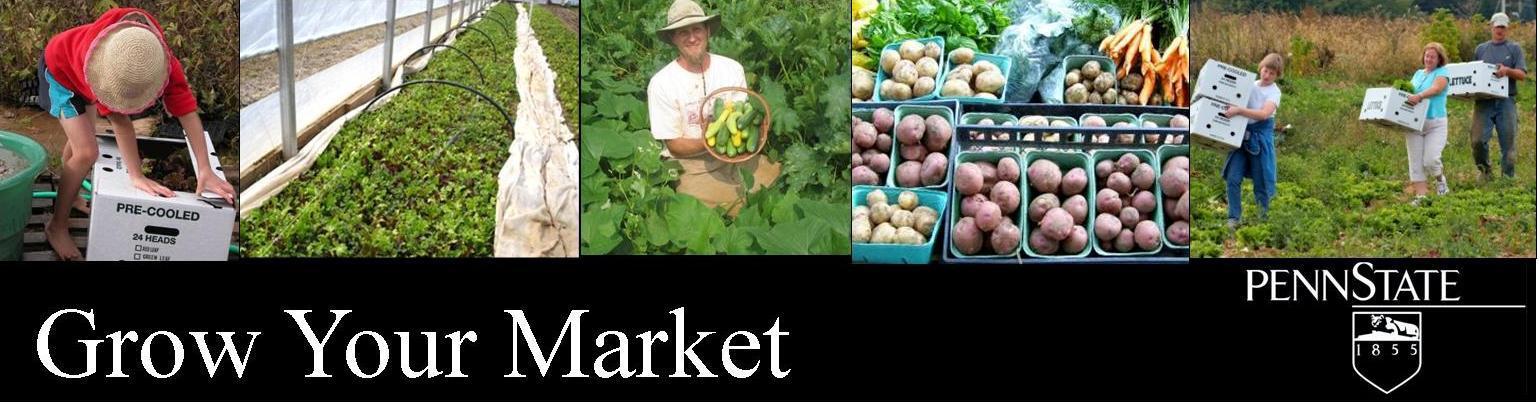
A one day workshop to explore business decisions Community Supported Agriculture (CSA) farmers need to make to be successful, addressed by experienced CSA farmers and agricultural professionals.
When: Monday, January 24, 2011, 9:00 am to 4:00 pm
Where: Berks County Agricultural Center, 1238 County Welfare Rd., Suite 110, Leesport, PA 19533
Cost: $ 30.00
Schedule
8:30 – 8:55am
Registration
8:55 – 9:00am
Welcome & Introductions
9:00 – 10:00am
CSA Planning: Budgets, Equipment & Labor
Mike Ahlert, Red Earth Farm
Peggy Fogarty-Harnish, Penn State Cooperative Extension
10:15 – 11:15am
Management Strategies
Tianna Dupont, Penn State Cooperative Extension
Heidi Secord, Cherry Valley CSA
Management Strategies
Tianna Dupont, Penn State Cooperative Extension
Heidi Secord, Cherry Valley CSA
11:30 am –12:30pm
Promotion, Communication & Planning
Stina Vosburgh, Robyn Van En Center
Lisa Kerschner, North Star Orchard
Promotion, Communication & Planning
Stina Vosburgh, Robyn Van En Center
Lisa Kerschner, North Star Orchard
12:30 – 1:30pm
Lunch
Lunch
1:30 – 2:30 pm
Exploring CSA Models - Multi-farm CSA’s
Alex Jones, Greens Grow
Lancaster Farm Fresh Cooperative
Exploring CSA Models - Multi-farm CSA’s
Alex Jones, Greens Grow
Lancaster Farm Fresh Cooperative
2:45 – 3:45 pm
Exploring CSA Models
John Good, Quiet Creek Farm
Mike Ahlert, Red Earth Farm
Jill Landis, Living Hope Farm
Eric Benner, Wilson College CSA
Exploring CSA Models
John Good, Quiet Creek Farm
Mike Ahlert, Red Earth Farm
Jill Landis, Living Hope Farm
Eric Benner, Wilson College CSA
Penn State encourages persons with disabilities to participate in its programs and activities. If you anticipate needing any type of accommodation or have questions about the physical access provided, please contact Brian Moyer, Penn State Cooperative Extension (610) 391-9840 in advance of your participation or visit. For more information visit: http://www.agmarketing.extension.psu.edu/ CSA School
Subscribe to:
Posts (Atom)

